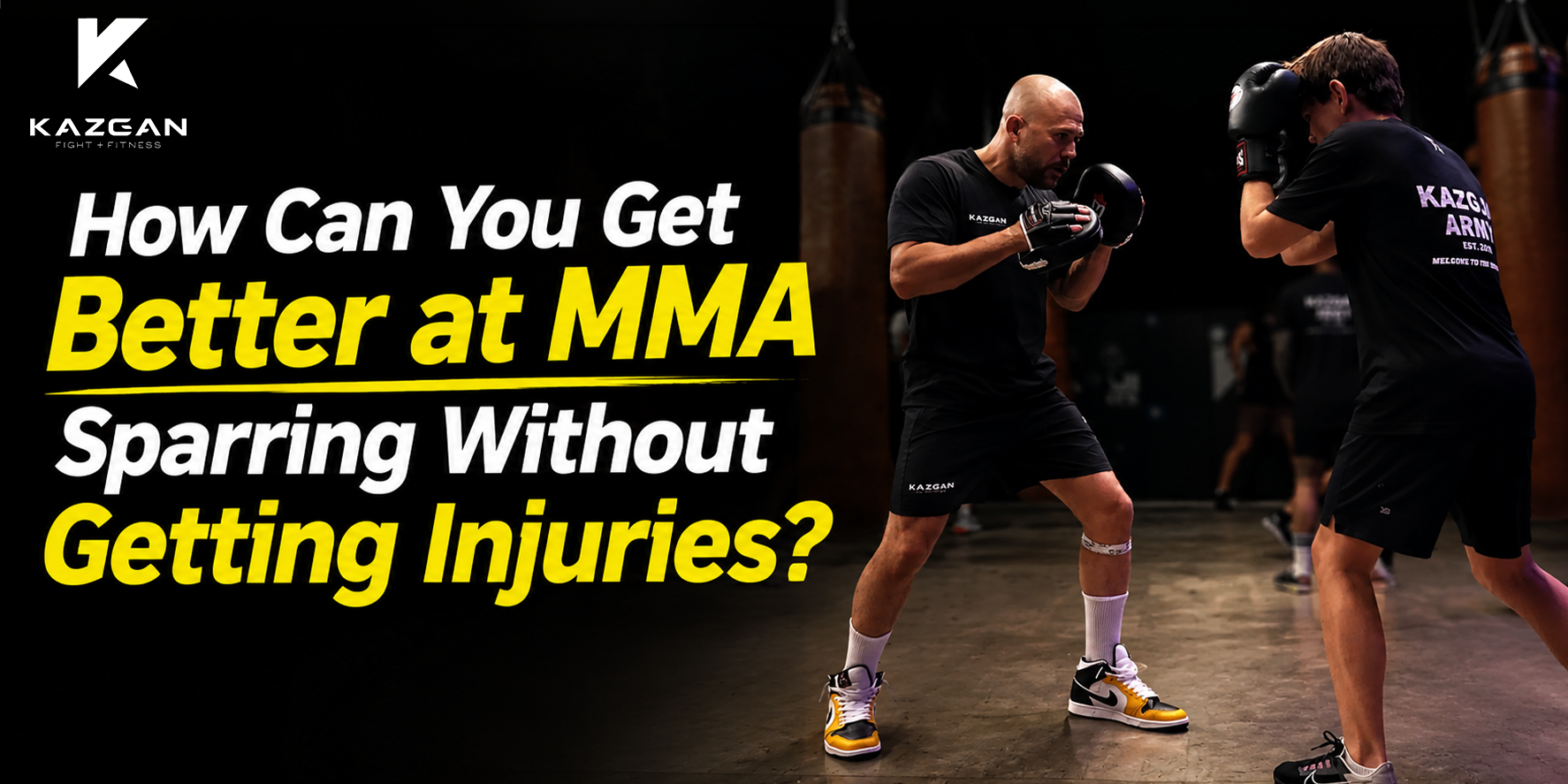
Getting better at MMA sparring without getting hurt really comes down to three things: pacing intensity, protecting the body’s weak points, and treating each round as a chance to learn instead of win. Most people looking for an MMA boxing gym near me want coaches who actually enforce that, not gyms where sparring turns into an all-out brawl every time. At Kazgan Fight + Fitness, that’s the approach with new students from day one.
Table of Contents
- What Should You Do Before an MMA Sparring Session?
- How Do You Protect Yourself During MMA Sparring?
- What Common MMA Sparring Mistakes Lead to Injuries?
- How Much Intensity Is Too Much in MMA Sparring?
- When Should You Take a Break From MMA Sparring?
What Should You Do Before an MMA Sparring Session?
Before stepping into MMA sparring, warm up properly, set a single goal for the round, and pick a partner whose intensity actually matches yours. Trying to win every exchange from the first bell is how injuries start. At Kazgan Fight + Fitness, we encourage students to treat rounds like a skill lab instead of a fight, since that shift in mindset changes the whole session.
Working on distance management, clean exits, or exposing one specific weakness gives the round a purpose beyond just surviving it. This kind of structured approach is what separates a real mixed martial arts training gym from a place that just lets people swing at each other.
How Do You Protect Yourself During MMA Sparring?
Protection during sparring comes down to defending the areas most likely to get hurt. Rolling with punches, keeping hands up, and using the gloves and pads provided in class matter more than most beginners realize. Coaches at Kazgan Fight + Fitness walk students through how to protect themselves, from head position to hand placement, well before their first sparring round. The direct coaching is where most of our MMA sparring safety tips come from. That protection breaks down into a few key areas:
- Head and Brain: Stay active on defense, keep hands high, and limit heavy head contact.
- Shins and Knees: Use shin pads for kicks, pivot properly on round kicks, and drive knees high on front kicks.
- Joints and Frames: Keep your elbows slightly bent, not locked out, and avoid high-risk moves such as heel hooks or wrist locks in regular sparring.
What Common MMA Sparring Mistakes Lead to Injuries?
Most sparring injuries trace back to letting ego take over technique. Chasing a tap or a knockout in a practice round, refusing to tap early to a joint lock, or matching power with a partner who cannot control theirs are the usual culprits. A locked elbow or a stubborn refusal to tap does not prove toughness; it just costs weeks of training later.
For those searching for the best MMA boxing gym for beginners near me, this is exactly the kind of mindset we try to train out of students at Kazgan Fight + Fitness, since long-term progress matters more than winning a practice round.
You May Also Like: Can MMA Training Help Professionals Deal With Daily Stress?
How Much Intensity Is Too Much in MMA Sparring?
MMA sparring crosses into risky territory once power goes above 70 percent or full-contact head strikes become the norm rather than an occasional exception. At that point, sparring starts functioning like an actual fight, which is where most avoidable injuries happen. Full-contact rounds have their place, especially closer to competition, but running them as the everyday default just wears the body down without teaching much more.
We at Kazgan Fight + Fitness keep sparring intensity at a level where students can think and react, not just survive. A few habits make that pacing easier to stick to:
- Stay Technical: Beginners benefit more from working through positions calmly than from trying to win every exchange.
- Set a Goal: A round focused on one specific skill teaches more than a round focused on scoring points.
- Match Your Partner: A partner who can’t ease off their power turns a learning round into a liability, no matter how skilled they are.
A controlled environment where learning comes before proving anything is the kind of pacing that students look for when searching for MMA sparring classes for beginners in West Palm Beach.
When Should You Take a Break From MMA Sparring?
A headache after MMA sparring, blurry vision, or sensitivity to light are not things to shake off. They’re signs of head trauma, and they call for real rest and a doctor’s clearance before getting back on the mats. Joint pain during sparring works the same way. Training through an injury that hasn’t healed just makes it worse over time.
Burnout deserves the same attention. Dreading a sparring session or losing interest in training isn’t a motivation issue; it usually means the body needs time off. This is the kind of balance we try to be mindful of at Kazgan Fight + Fitness, since staying in the sport long term matters more than pushing through any single session.
Sign Up for Coached Sparring at Kazgan Fight + Fitness
MMA sparring rewards students who train with focus. Contact Kazgan Fight + Fitness to sign up for our class and see how sparring is coached with safety in mind during every round. A little discipline today goes a long way later.
Coming up next, a closer look at why solo training only gets a Brazilian Jiu-Jitsu practitioner so far, and what changes once real coaching enters the picture.
Frequently Asked Questions
- Is MMA sparring necessary to get better at fighting?
MMA sparring builds timing and instinct that drilling alone cannot replicate, and we structure MMA sparring sessions carefully so students build those skills safely.
- How often should beginners do MMA sparring each week?
Once or twice a week of MMA sparring is plenty for most beginners, and we guide new students on pacing that matches their experience level.
- Does MMA sparring get easier over time?
MMA sparring gets more controlled and less chaotic as technique improves, and we help students track that progress class by class.